February 19, 2026 · 5 min read
When to bring your cat to the vet
By Dr. Amelia Chen
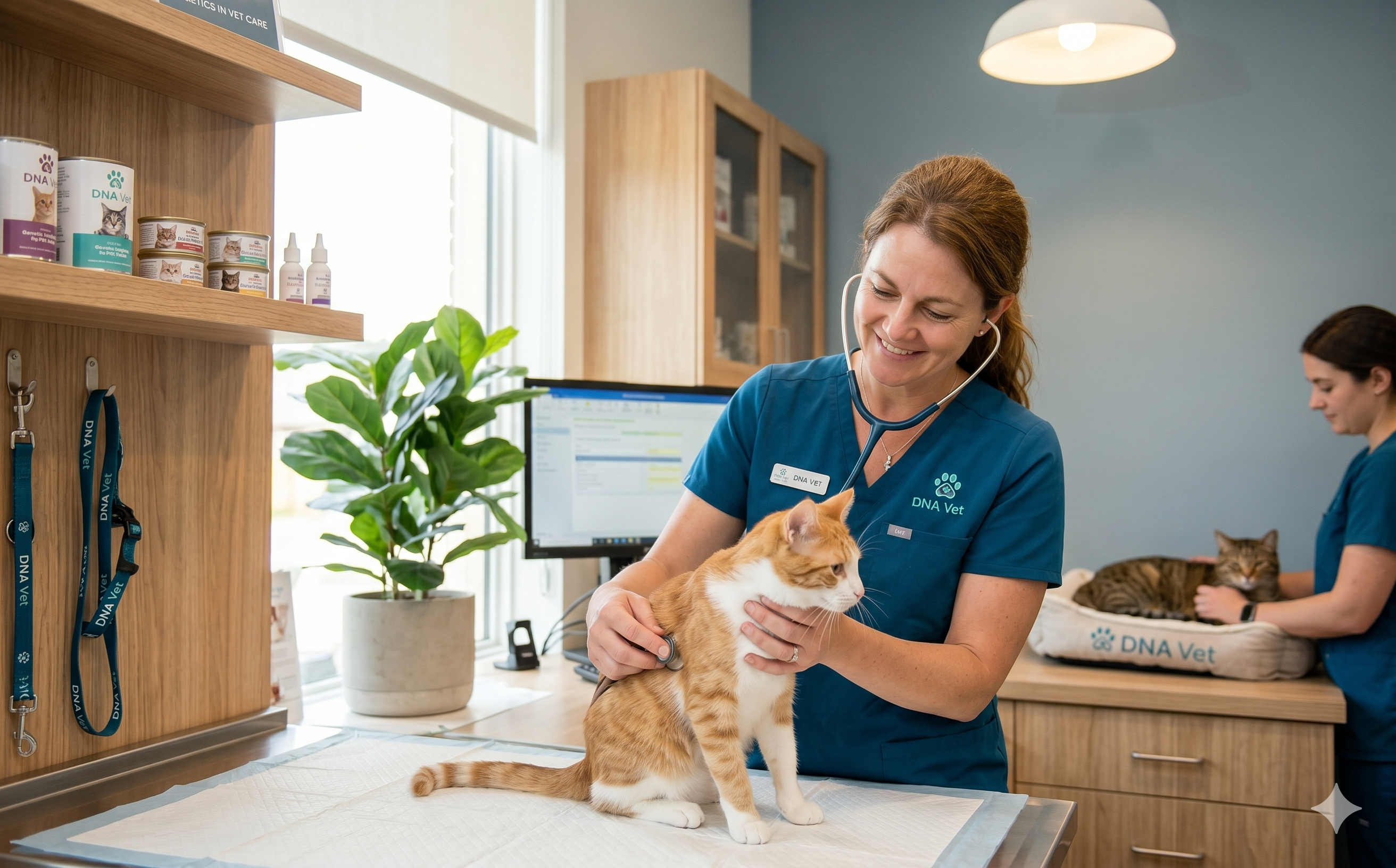
Cats are descended from solitary desert ambush predators. Showing weakness in the wild gets you killed. So your cat — even after thirty thousand years on the couch — has a strong instinct to hide pain and illness right up until they can’t hide it anymore.
This is why so many feline diagnoses come late, and why I’d rather see a cat for a “probably nothing” visit than skip a real one.
The four signs that get a same-day call
If any of these are happening, call us today. Not next week.
1. Not eating, or eating noticeably less, for 24 hours. A cat that skips meals for two days can develop hepatic lipidosis — fatty liver disease — and that gets serious fast.
2. Straining in the litter box, especially a male cat. A cat that goes in and out, in and out, with little or no output is a urinary blockage until proven otherwise. This is a true emergency.
3. Hiding more than usual, or in unusual places. A cat that’s normally on the couch and is now under the bed for two days running is telling you something.
4. Breathing with the mouth open, or breathing rapidly at rest. Cats almost never breathe through their mouths. If yours is, drive in.
The slower-burn signs
These are less urgent but worth a wellness visit within the next week or two:
- Drinking noticeably more water (often a sign of kidney disease, diabetes, or hyperthyroidism)
- Losing weight despite eating well
- Vomiting more than once a week
- A new lump or a lump that’s changed
- Bad breath that’s gotten dramatically worse — dental disease is more painful than most owners realize, and cats are particularly bad at telling us about it
The “she’s just getting older” trap
I hear this a lot, and I want to be honest: most of what we attribute to old age in cats is actually a treatable disease. Hyperthyroidism, kidney disease, arthritis, dental pain — none of these are normal aging. They’re all things we can manage, often well. If your senior cat seems to be slowing down, please don’t write it off. Bring her in. We’d rather find something at stage two than at stage four.
What we do to make the visit easier
Our cat-only exam rooms have pheromone diffusers, pheromone-sprayed towels for the carrier, and we’ll happily let your cat decompress in the room for ten minutes before we touch her. If your cat is genuinely fearful, ask about our quiet entrance and exam room — it bypasses the lobby entirely.
Cats don’t enjoy the vet. We understand. We’ve designed for it.